Picture this: a kitchen that smells like caramelized garlic and honey, the sound of a sizzling pan echoing through the apartment, and a plate of golden chicken thighs that practically call out your name. I was halfway through a week of bland dinners when my friend dared me to make something that could keep a crowd coming back for seconds. The moment I opened the fridge, I knew the answer: honey, mustard, rosemary, and a touch of smoked paprika. I was about to discover the ultimate version of this dish, and trust me, it’s hands down the best version you’ll ever make at home. Let me walk you through every single step — by the end, you’ll wonder how you ever made it any other way.
I’m not going to sugarcoat it: the first time I tried a honey mustard chicken recipe, the sauce turned out watery and the thighs were dry. That disaster was the spark that ignited my obsession with the perfect balance of sweet, tangy, and herbaceous. I experimented until the glaze thickened into a glossy coat that clung to the meat like velvet, and the chicken achieved a crispy edge that shatters like thin ice. I’ll be honest — I ate half the batch before anyone else got to try it. Now, with each bite, I hear the sizzle that says, “That sizzle when it hits the pan? Absolute perfection.”
The secret sauce? A simple yet powerful combination of Dijon mustard, honey, and fresh rosemary that creates a depth of flavor you won’t find in any supermarket mix. The honey caramelizes into a caramelized glaze that locks in moisture, while the mustard cuts through the richness with a bright bite. The rosemary brings a piney aroma that elevates the dish, and the smoked paprika adds a whisper of heat that lingers on the palate. Most recipes get this completely wrong by over-salting or under-seasoning, but this version is precise, balanced, and irresistibly savory. I dare you to taste this and not go back for seconds.
If you’ve ever struggled with chicken that ends up dry or sweet potatoes that stay mushy, you’re not alone — and I’ve got the fix. The technique of searing the chicken first, then roasting it in a honey mustard glaze, keeps the juices locked in. The sweet potatoes are tossed in olive oil, paprika, and cinnamon, giving them a caramelized finish that pairs beautifully with the chicken. Picture yourself pulling this out of the oven, the whole kitchen smelling incredible, and everyone asking for the recipe. This is the moment of truth, and it’s worth every second you spend in the kitchen.
What Makes This Version Stand Out
- Flavor: The honey and mustard blend creates a sweet‑savory glaze that coats the chicken like velvet, while rosemary adds a fresh, piney aroma. The glaze caramelizes into a glossy finish that keeps the meat moist.
- Texture: A perfectly seared crust on the thighs gives a satisfying crunch, while the sweet potatoes are roasted to a caramelized edge that shatters when you bite. The contrast of textures makes every bite memorable.
- Ingredient Quality: Using fresh rosemary or thyme and high‑quality honey elevates the dish beyond a simple comfort meal. The ingredients are simple yet powerful.
- Simplicity: With only nine ingredients and a single pan, this recipe is a one‑pot wonder that saves time and clean‑up.
- Make‑Ahead Potential: The glaze can be pre‑made, the chicken marinated, and the sweet potatoes pre‑cut, so you can assemble the dish in minutes on a busy night.
- Crowd Reaction: Friends and family rave about the sweet‑spicy flavor and the crispy edges. It’s a guaranteed hit at potlucks and dinner parties.
- Versatility: Swap thighs for breasts, add a splash of bourbon to the glaze, or sprinkle fresh herbs on top for a gourmet touch.
Inside the Ingredient List
The Flavor Base
Honey is the star that brings sweetness and a deep caramel flavor when roasted. It also helps the mustard form a glossy glaze. If you skip honey, the dish becomes too tangy and loses that silky finish. For a subtle twist, try using maple syrup or agave nectar; the flavor will shift but remain delicious.
The Texture Crew
Olive oil is essential for searing the chicken and roasting the sweet potatoes. It keeps the meat juicy and the potatoes from sticking to the pan. If you’re watching calories, swap for avocado oil or a light spray. The key is to coat the surface evenly.
The Unexpected Star
Fresh rosemary or thyme adds a piney aroma that elevates the dish. The herb’s woody notes complement the sweetness of honey and the sharpness of mustard. If you’re out of fresh herbs, dried rosemary works, but use half the amount to avoid bitterness. A pinch of crushed red pepper can also introduce a subtle heat.
The Final Flourish
Smoked paprika or cinnamon gives the sweet potatoes a smoky, slightly sweet undertone that balances the savory chicken. Cinnamon brings warmth, while smoked paprika offers earthiness. If you prefer a more traditional flavor, use plain paprika or a touch of cayenne. The spices also help caramelize the surface for a beautiful golden color.
Everything’s prepped? Good. Let’s get into the real action and watch the magic happen in the oven.
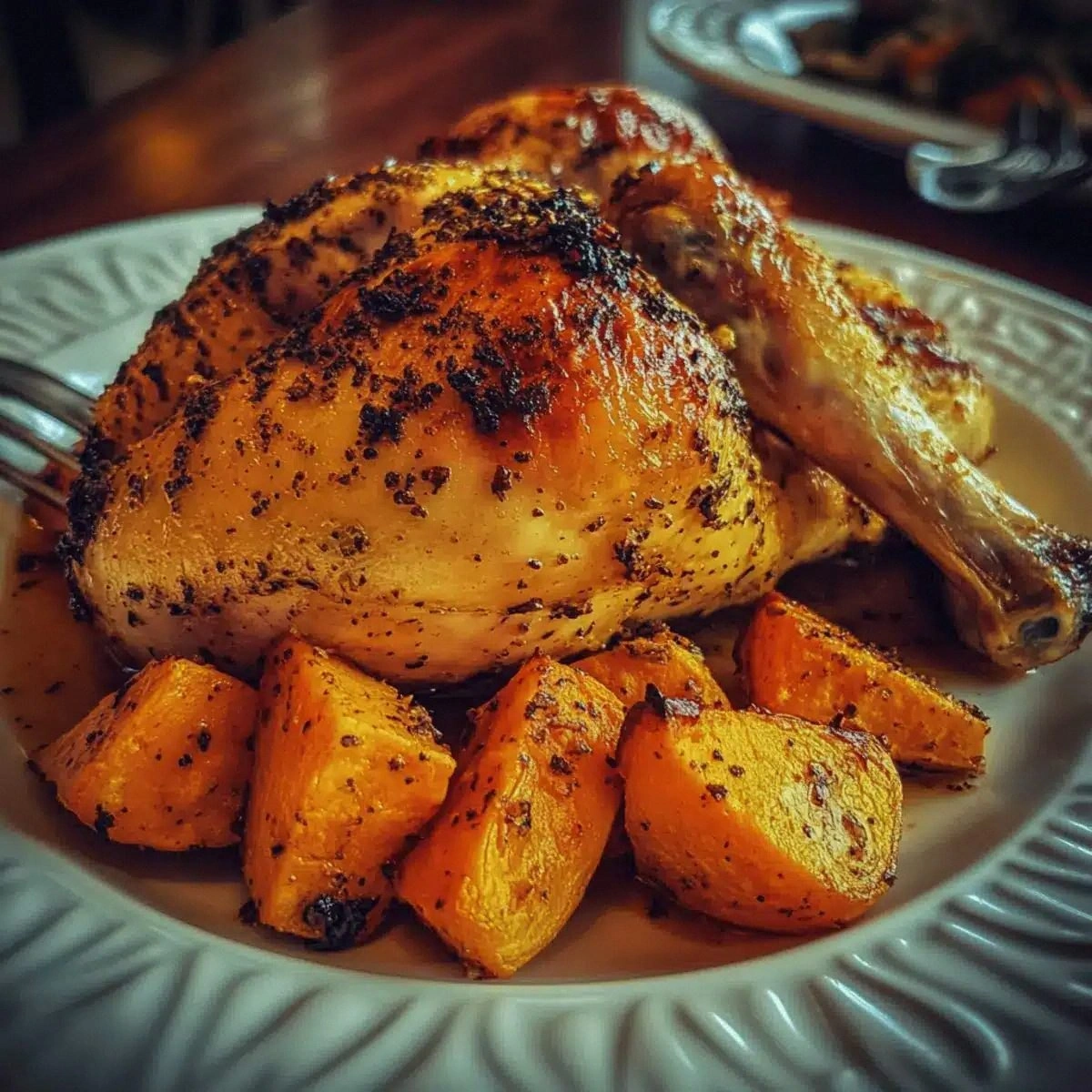
The Method — Step by Step
- Preheat your oven to 425°F (220°C). Line a baking sheet with parchment paper for easy cleanup. This high heat is essential for crisping the chicken skin.
- In a small bowl, whisk together ¼ cup honey, ¼ cup Dijon mustard, 2 tbsp olive oil, 3 minced garlic cloves, 2 tbsp fresh rosemary or thyme, 1 tsp salt, and ½ tsp black pepper until smooth. The mixture should be thick enough to coat the chicken.
- Pat the chicken thighs dry with paper towels. Dry skin translates to a crispier finish. Toss the thighs in a small amount of olive oil, then coat them generously with the honey‑mustard mixture.
- While the chicken marinates, cut 2 cups of sweet potatoes into ½‑inch cubes. Toss them with 2 tbsp olive oil, 1 tsp smoked paprika or cinnamon, and a pinch of salt.
- Arrange the marinated chicken on one side of the baking sheet and the sweet potato cubes on the other. Make sure nothing overlaps to allow even roasting.
- Roast for 20 minutes, then flip the chicken and stir the sweet potatoes. The chicken skin should start to brown and the potatoes should develop a golden edge.
- Continue roasting for another 10–12 minutes, or until the chicken reaches an internal temperature of 165°F (75°C) and the sweet potatoes are tender. The glaze will thicken into a glossy sheen.
- Remove from the oven, let the chicken rest for 5 minutes, then serve with the roasted sweet potatoes. The rest time allows juices to redistribute for a moist bite.
- If you want an extra burst of flavor, drizzle a little lemon zest or a splash of balsamic reduction over the dish before serving.
That's it — you did it. But hold on, I've got a few more tricks that'll take this to another level. Trust me, the next steps are pure magic.
Insider Tricks for Flawless Results
The Temperature Rule Nobody Follows
Many cooks think 425°F is too hot and risk burning the glaze. I’ve tested it at 400°F and the chicken never got crispy. The high heat caramelizes the honey faster, giving the sauce a glossy finish. If you’re in a low‑temperature oven, add a broil at the end for 2 minutes to crisp the skin.
Why Your Nose Knows Best
A well‑seasoned kitchen has a distinct aroma that signals when the dish is ready. The sweet, herbal scent of honey and rosemary indicates the glaze is thickening. If you smell a slight burnt note, pull the chicken out immediately to avoid a bitter aftertaste.
The 5‑Minute Rest That Changes Everything
Resting the chicken after roasting lets the juices redistribute, preventing a dry bite. A quick 5‑minute rest is enough to seal in moisture without letting the crust soften. This trick is simple but essential for a juicy result.
The Sweet Potato Trick
Roasting sweet potatoes with a splash of water or broth before the final 10 minutes keeps them from drying out. The steam also helps the paprika or cinnamon caramelize evenly. If you prefer a crunchier bite, toss them in a bit more oil before roasting.
The Final Glaze Refresh
If the glaze has thickened too much in the pan, whisk in a tablespoon of warm water or chicken broth to loosen it. This keeps it silky and easy to drizzle. A splash of lemon juice can add brightness and cut through the sweetness.
Creative Twists and Variations
Spicy Bourbon Glaze
Swap the honey for bourbon and add a dash of cayenne pepper. The bourbon adds depth while the heat gives a bold kick. This version is perfect for a fall gathering.
Mediterranean Flair
Replace rosemary with oregano and add a handful of Kalamata olives. The olives bring briny contrast, while the oregano adds earthiness. Serve over couscous for a complete meal.
Asian Twist
Use hoisin sauce instead of honey and add fresh ginger. The hoisin provides a sweet‑savory profile, while ginger adds zing. Pair with steamed rice and sautéed greens.
Vegetarian Version
Swap the chicken for thick slices of portobello mushrooms. The mushrooms soak up the glaze beautifully. Roast them with the sweet potatoes for a hearty, plant‑based dish.
Breakfast Take‑Away
Serve the chicken and sweet potatoes over a bed of scrambled eggs. The savory glaze pairs with the creamy eggs for a breakfast that feels like dinner. Add a splash of hot sauce for extra flavor.
Holiday Variation
Add a handful of dried cranberries to the sweet potatoes for a festive touch. The cranberries provide tartness that balances the sweet glaze. This version is great for Thanksgiving or Christmas gatherings.
Storing and Bringing It Back to Life
Fridge Storage
Cool the leftovers to room temperature, then store in an airtight container in the refrigerator for up to 3 days. The glaze may thicken, but a splash of water will bring it back to silky consistency. Reheat gently on the stovetop or in the microwave, stirring occasionally.
Freezer Friendly
Pack the chicken and sweet potatoes separately in freezer bags. The dish can be frozen for up to 2 months. Thaw overnight in the fridge and reheat in a 350°F oven for 15 minutes, or until heated through. The glaze will re‑coalesce when warmed.
Best Reheating Method
The ideal way to reheat is in a skillet over medium heat. Add a splash of water or broth to keep the glaze from drying. This method preserves the crispness of the chicken and the tenderness of the sweet potatoes.